

Edinburgh Futures Institute at the University of Edinburgh
Sector: Further Education
Framework: SCAPE Scotland Consultancy
Client: University of Edinburgh
Budget: £120m
Location: Edinburgh, Scotland

“AtkinsRéalis has worked with the University of Edinburgh on a number of projects across our estate. They have ranged from £2m to over £100m in value, and the largest of them has been the Edinburgh Futures Institute. From the outset, AtkinsRéalis has embodied a collaborative working approach, demonstrating effective leadership to develop strong project delivery teams. AtkinsRéalis has understood and defined the objectives for each project, clearly communicating them to the project team and wider stakeholders. They have implemented robust governance arrangements and have proven their ability to deliver complex programming and sequencing of design and construction works. The University has found AtkinsRéalis excellent to work with.”
Jane Johnston
Director of Estate Development, University of Edinburgh
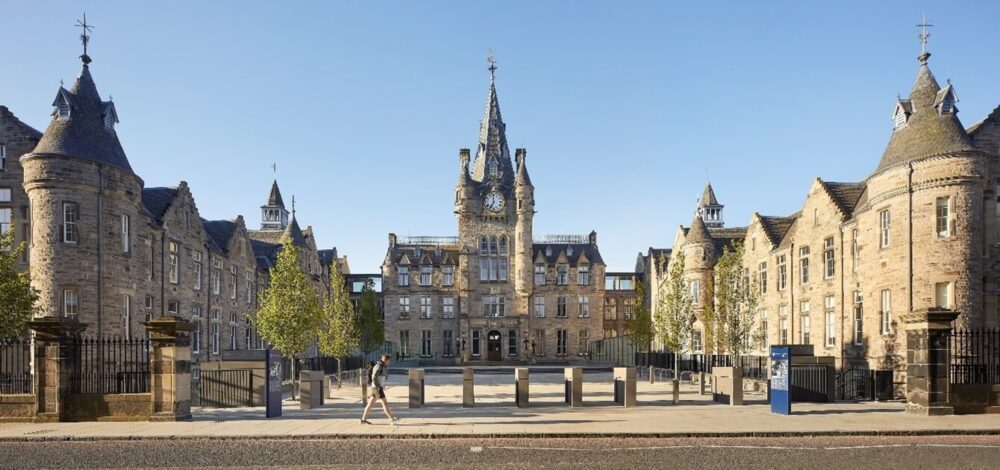
Edinburgh’s historic Royal Infirmary has been transformed into a civic hub for innovation and learning.
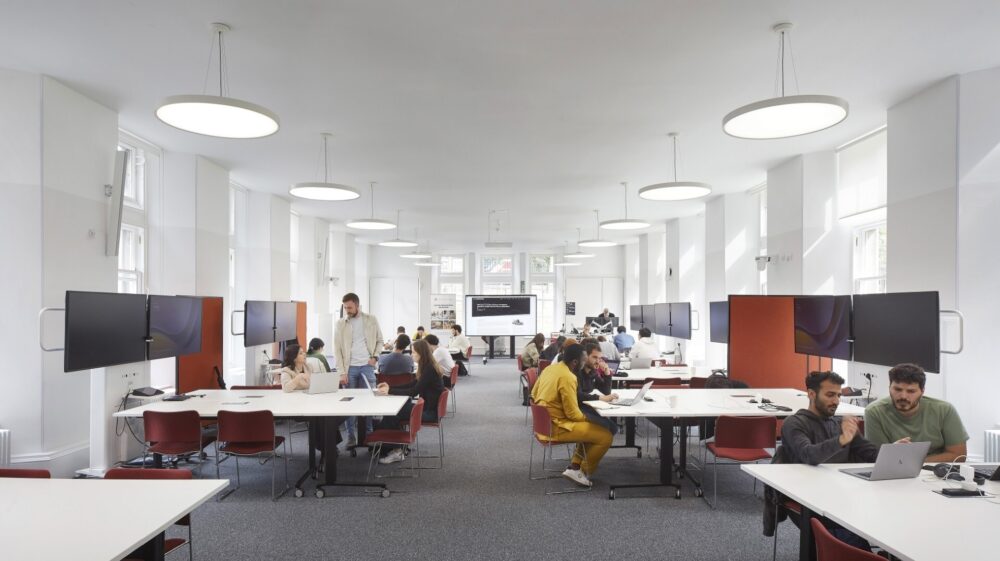
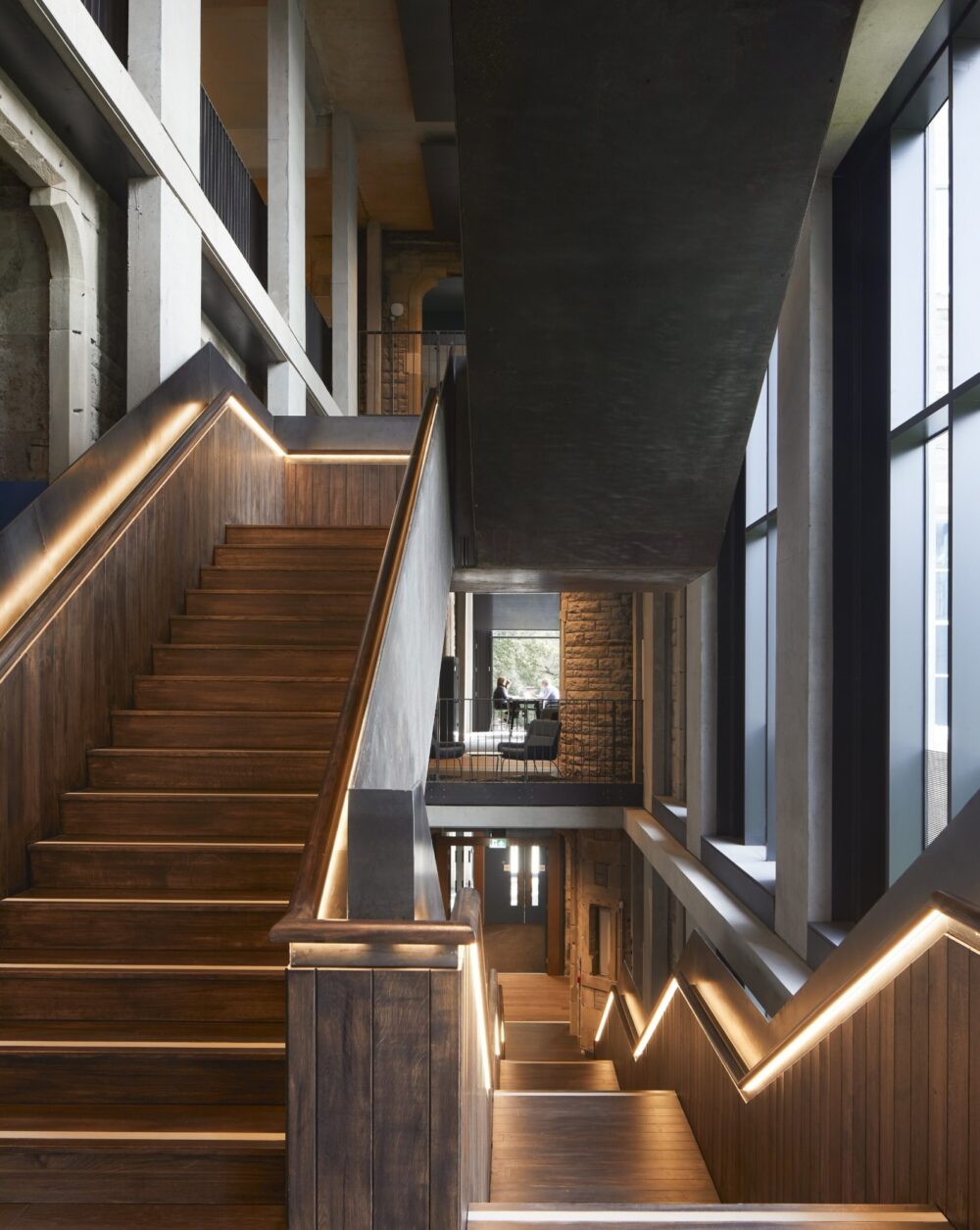
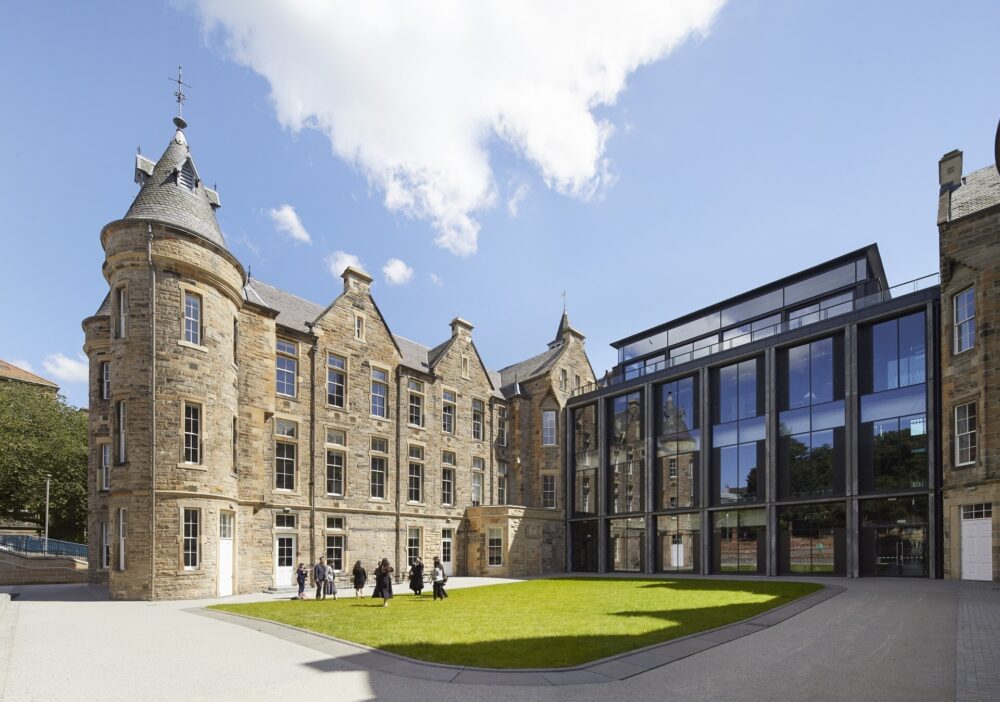
Ten years of meticulous refurbishment, restoration and extension have transformed Edinburgh’s beloved Category-A listed Royal Infirmary into the Edinburgh Futures Institute — a state-of-the-art space for teaching, research and ethical, data-driven innovation at the University of Edinburgh. The restored and extended 21,000m² heritage building now supports interdisciplinary programmes and provides an innovation hub for business, bridging the gap between industry, academia and research. A new entrance plaza, footpaths and public realm completed the project, stitching the building back into its surroundings.
Appointed via the SCAPE Scotland Consultancy framework, AtkinsRéalis led delivery of the £120-million project, a benchmark in heritage-led regeneration and sustainable design. The project’s success has reached far and wide, winning multiple awards and helping exemplify what’s possible when collaboration, vision and purpose come together.
The project aimed to repurpose the decommissioned Royal Infirmary into a future‑facing facility for students, academics, researchers and industry partners. It needed to preserve the building’s heritage while creating flexible, technology‑enabled spaces for collaboration and learning.
The project also aimed to make the building more open to the public and help the university work more closely with the local community, aligning with the university’s strategic goals and the city’s regeneration plans.
The building’s existing condition posed significant challenges, including concerns about structural instability, asbestos and water ingress. Originally designed for infection control through isolation, the layout also conflicted with the new vision of openness and collaboration. Together, these constraints required complex enabling works, including phased demolition, conservation-led restoration and innovative structural solutions.
Socioeconomic factors such as Brexit, COVID-19, and the war in Ukraine added further complexity. The team overcame these challenges through close collaboration, adaptive design and stakeholder engagement, working closely with Historic Environment Scotland and the City of Edinburgh Council.
The new Edinburgh Futures Institute stands as a landmark achievement in heritage-led regeneration and educational innovation. The project has exceeded expectations, transforming the former infirmary into a vibrant civic and academic hub. The building now helps bring different subjects together, opens the university up to the public, and makes it easier to work with industry partners, fulfilling the University of Edinburgh’s vision for a future-facing institution rooted in history.
Its impact has been widely recognised: the project won Refurbishment of the Year at the Education Estates Awards 2025, and was also recognised at the Learning Places Scotland Awards 2024. Internationally, the building received the UNESCO Prix Versailles Special Prize for an Interior, placing it among the world’s most beautiful campuses.
What’s more, the building has become a catalyst for regeneration in the Quartermile area, stitching a once-derelict site back into the fabric of the city. It is now a thriving venue for public events, academic research and industry partnerships, and a symbol of openness and inclusion, living up to the historic inscription above its entrance: Patet Omnibus – open to all.
“It’s a project which has been many years in creation. To be able to open to the public is very exciting. We have event spaces, the book festival, we will have tenants living in the building, researchers and students learning. We want to bring people together to use data responsibly to solve the biggest challenges facing us in today’s world. We’ve got colleagues who worked and trained here, people who have lost family members and had children here. We’re very respectful of the fact this is part of the city’s history, which belongs to the people of Edinburgh.”
Jude Henderson
Chief Executive, Edinburgh Futures Institute

Sustainability credentials
The Edinburgh Futures Institute demonstrates a strong commitment to sustainability through both its design and delivery:
- A conservation-led approach retained as much of the existing shell, internal structures, and finishes as possible, significantly reducing embodied carbon. Original materials, including stone and slate, were carefully salvaged and reused, while retained structures were selectively enhanced to ensure resilience and adaptability for future change.
- The project prioritised local procurement to minimise transport emissions and support the regional economy.
- Operational carbon was addressed through a combination of passive and active strategies. The building envelope was upgraded with robust insulation, and high-performing fabric elements were used in new-build portions to reduce energy demand.
- Natural ventilation was reinstated via openable windows and trickle vents, while mechanical ventilation was limited to high-density areas and tailored to specific space usage.
- Thermal modelling informed the design to ensure comfortable internal conditions, leveraging the building’s thermal mass.
- Heating and hot water were supplied via the university’s central Combined Heat and Power (CHP) plant and district heat network, with on-site cooling provided by an absorption chiller that utilises waste heat.
- A Building Energy Management System (BEMS), LED motion sensors, and daylight monitoring systems further enhanced energy efficiency.
Why SCAPE Scotland?
What did the SCAPE Scotland framework bring to the project?
Using SCAPE Scotland’s frameworks enabled the University of Edinburgh to appoint a trusted delivery team with a proven track record of collaboration, and AtkinsRéalis ensured continuity, shared values, and a productive ethos from the outset. The SCAPE route provided a streamlined procurement process, allowing the university to mobilise quickly and maintain momentum across the project’s ten‑year duration, while providing confidence and value for money.
What were the benefits of using SCAPE Scotland?
Using the SCAPE Scotland framework brought significant benefits to the Edinburgh Futures Institute project. It supported early contractor involvement, which was critical in managing the complex enabling works and de-risking the refurbishment of a structurally compromised heritage building.
The framework’s emphasis on social value aligned with the university’s goals, facilitating community engagement, employability initiatives and regeneration of the surrounding Quartermile area.
SCAPE Scotland’s governance and transparency requirements helped maintain high standards of professionalism, cost control and stakeholder communication throughout, contributing to the project’s successful delivery and multiple award recognitions
Social value delivered via contractor Balfour Beatty’s contributions:
- 77% of site labour sourced within a 40-mile radius
- 2 hosted placements for students at the Royal School of Military Engineering
- Worked with Developing the Young Workforce to support their Get Work Ready programme
- Delivered an employability course at HMYOI Polmont for young offenders
- Hosted a series of mental health workshops from the charity Kickin' On
- Donations supporting refugees through the Syrian Futures Foundation
- Donated toiletries to local people affected by homelessness through the charity Streetworks
- Surplus IT equipment donated to local charities
In collaboration with:


Meet the lead:

Rachel Park
Framework Manager, SCAPE Scotland
Project gallery

Related case studies

Consultancy frameworks | Further and Higher Education
University of Edinburgh, The Scott Hotel

Construction frameworks | Offices, Civic Buildings, Community Centres, Libraries, Museums and Art
Twechar Outdoor Pursuits Centre

Start a project with AtkinsRéalis today
AtkinsRéalis is one of the largest construction consultancies in Scotland, delivering programme and project management, cost and commercial management, building surveying, health and safety and strategic asset management services.