

The Royal Botanic Garden Edinburgh - Victorian Palm House Restoration
Sector: Heritage
Framework: SCAPE Scotland Civil Engineering Framework
Client: Royal Botanic Garden Edinburgh
Location: Royal Botanic Garden Edinburgh, Inverleith, Edinburgh
Value: £12.5m
Completion: 2025

“The restoration of our historic 19th century Palm Houses has been an undertaking of remarkable complexity, but now, thanks to our contractors and teams across the Royal Botanic Garden Edinburgh, the much-loved Palm Houses once again glitter across the city skyline, ready for the return of our Living Collection of plants. Throughout the three-year construction period, our main contractor Balfour Beatty has demonstrated exceptional resilience, professionalism, dedication and ingenuity, overcoming both anticipated challenges and unexpected hurdles, to return these horticultural and architectural jewels in Scotland’s crown to their former glory.”
Simon Milne
Regius Keeper of the Royal Botanic Garden Edinburgh
Restoring Edinburgh’s iconic Palm Houses while growing skills, jobs and community value, this project safeguarded two Grade A-listed buildings and almost 800 rare and internationally significant plant specimens.
Delivered for Royal Botanic Garden Edinburgh (RBGE) by Balfour Beatty through the SCAPE Scotland Civil Engineering Framework, this restoration's community and education activity connected construction with conservation, biodiversity and sustainability, while strong local labour, SME and supply-chain performance retained investment in Edinburgh.
Creating wider social and economic value for people and the planet throughout its three-year duration, the project created targeted employability partnerships by supporting young people and displaced Ukrainians into training, work experience and employment. It also supported the circular reuse of waste glass to create a visible environmental legacy beyond the restored buildings.
The project was required to halt deterioration of the Tropical and Temperate Palm Houses and secure their future role within RBGE’s Edinburgh Biomes programme.
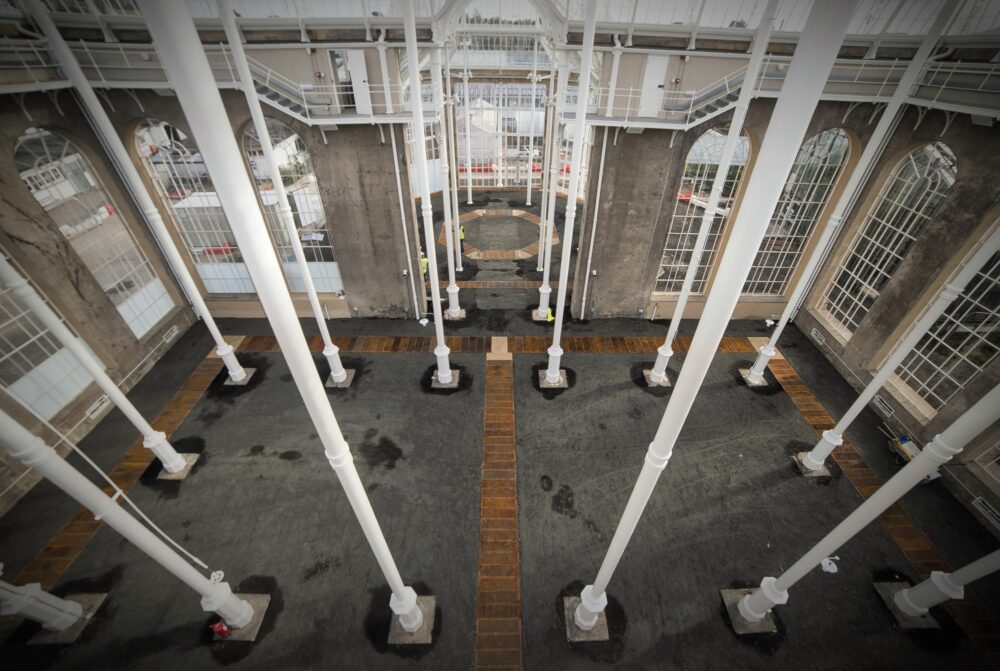
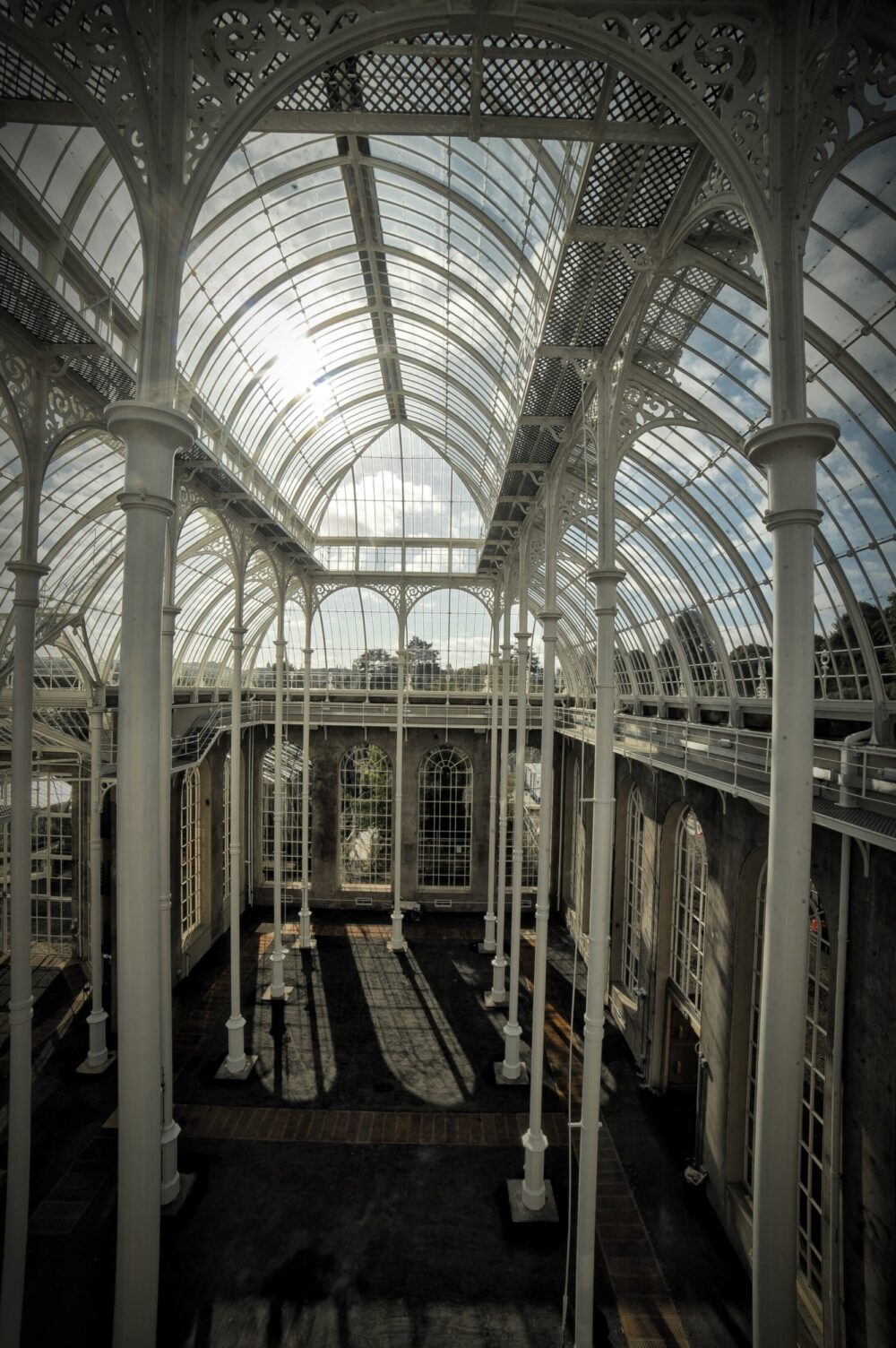
Works included sensitive repair or replacement of stonework, glazing, roof structures, ironwork, staircases, gutters and drainage, while retaining as much original fabric and character as possible.
The principal end users are RBGE’s horticulture, science, conservation and education teams, visitors, and the globally important Living Collection.
Objectives were to protect almost 800 plant specimens normally housed within the Palm Houses; meet statutory obligations associated with the Grade A-listed structures; provide resilient, operational facilities for future conservation, research and learning; and deliver the works safely, on time and within budget.
The social value brief also sought employment pathways for underrepresented groups, greater awareness of construction and conservation careers, meaningful community participation, local economic benefit, and a reduced environmental footprint.
Delivering complex construction within a nationally important botanic garden required exceptional protection of heritage fabric, biodiversity and the wider site. The structures were almost 200 years old, with extensive deterioration across stone, iron and glazing; 5,750 panes of glass, around 500m² of sandstone and more than 600m² of structural ironwork required specialist attention.
Access involved substantial internal and external scaffolding and weatherproof wrapping, while biosecurity and environmental controls protected the Living Collection and surrounding garden. The team coordinated specialist stonemasons, glaziers, ironworkers and conservation professionals, repairing rather than replacing original elements wherever feasible.
Uncertainty inherent in opening historic fabric demanded close collaboration, sequencing and responsive problem-solving. Alongside technical delivery, the team had to translate a high-profile restoration into accessible employment and community opportunities. Partnership working with RBGE, Action for Children, Capital City Partnership, education teams and the supply chain enabled placements and engagement to proceed without compromising safety, quality or programme.
The project restored and strengthened two iconic Grade A-listed Palm Houses, safeguarding internationally important botanical collections and preparing the buildings for their future conservation, research, education and visitor role.
Delivery was completed on time and on budget, with customer satisfaction of 8/10 and supply-chain satisfaction of 9.6/10. The project achieved a Considerate Constructors Scheme score of 45/45, including a number of CCS site awards in Gold and Silver, diverted 99% of waste from landfill, and recorded zero health, safety or environmental incidents.
More than 205,000 workforce hours and 755 days were completed without a reportable accident or incident.
Social value outcomes
Inspiring the next generation
The project’s social outcomes included a YouthBuild participant progressing from placement to full-time employment with Balfour Beatty and two Ukrainian Construction Academy placements on site. In addition, seven Academy participants secured roles with Balfour Beatty, while a further two gained employment elsewhere in the construction industry.
- Apprenticeships supported: 468.63 weeks were delivered against a 180-week target — 260.4% achieved
- Support for young people into work: 49 hours were delivered against a 40-hour target — 122.5% achieved
- Meaningful work placements/pre-employment courses: 18 weeks were delivered against an 11-week target — 163.6% achieved
Making a difference for the local community
Local economic outcomes included 40.5% SME spend, 22% supply-chain spend and 58% local labour within 20 miles, alongside 100% fair payment performance.
Donations and in-kind contributions totalled £23,866.96 delivered against a £17,500 target, and employee volunteering totalled 129.5 hours delivered against a 100-hour target.
Supporting sustainability
Heritage-sensitive methods prioritised the repair and retention of existing stone and ironwork, supported by strict biosecurity and environmental management.
A standout circular-economy innovation repurposed approximately four tonnes of waste glass removed from the Palm Houses into geopolymer concrete for bespoke benches and paving materials. This transformed a difficult waste stream into a visible and lasting legacy, while helping ensure that 99% of project waste was diverted from landfill.
The project also trialled approaches supporting a roadmap towards a zero-carbon construction site, considering site energy demand, supply-chain emissions, material choices and design for deconstruction alongside cost, programme, quality and safety.
Why SCAPE Scotland?
What did the SCAPE Scotland framework bring to the project?
The SCAPE Scotland Civil Engineering Framework provided a compliant, competitively tendered route to appoint an experienced delivery partner for a complex public-sector heritage project. It embedded performance management, social value and sustainability from the outset, enabling RBGE and Balfour Beatty to align technical delivery with local employment, skills, SME participation, fair payment and environmental objectives.
The framework also supported early collaboration with the client, specialist supply chain and community partners, helping the team manage risk and convert the restoration into a platform for lasting social value.
What were the benefits of using SCAPE Scotland?
Key benefits included assured compliance, accelerated procurement, transparent performance monitoring and access to an established national contractor and specialist supply chain.
SCAPE Scotland’s emphasis on local economic value helped focus delivery on SME spend, local labour and local sourcing, while bespoke social value planning supported employability programmes and community engagement. The framework’s collaborative approach enabled technical, commercial, safety and sustainability priorities to be managed together, contributing to on-time and on-budget delivery, strong satisfaction scores and measurable legacy outcomes.
Social value outcomes
This project has been submitted by Balfour Beatty as part of the collaborative Social Value in Construction Benchmarking Report. This report captures the latest insights into the regional and national trends in social value delivery; learn more here.
40.5%
SME spend
22%
supply-chain spend
58%
local labour within 20 miles
100%
fair payment performance
468.63
weeks delivered against a 180-week target (260.4% achieved)
In collaboration with:


Meet the lead:

Rachel Park
Senior Framework Manager
Project gallery


Related case studies

Civil Engineering frameworks | Transport & Infrastructure (Roads/Rail/Air)
Arbroath A Place for Everyone

Civil Engineering frameworks | Transport & Infrastructure (Roads/Rail/Air)
Leith Connections Active Travel
SCAPE Scotland Civil Engineering framework
For the public sector
SCAPE's Civil Engineering frameworks are designed to accelerate your essential civil engineering and infrastructure projects, delivering them to the highest possible standard and ensuring the UK remains connected, protected and operates with a well-maintained highways network..
Social Value in Construction
Benchmarking Report
SCAPE's annual report in collaboration with Social Value Portal that captures the latest insight into the regional and national trends in social value delivery.